The Murder in Kairotei or Kairoutei Satsujin Jiken or 回廊亭殺人事件 (2011)
 television
The Murder in Kairotei or Kairoutei Satsujin Jiken or 回廊亭殺人事件 (2011) is a made-for-television film version of Kairoutei Satsujin Jiken (1991) by Keigo Higashino. The best way to describe the nature of the plot is as a classic Golden Age detective format in service of a revenge thriller. So where do we start? Eriko Kiryu (Takako Tokiwa) is seen arriving at the exclusive guest house owned by the Hara family. In the best metafictional style, she tells viewers she’s come for revenge. The family are attending for the reading of the will left by Takaaki Hara (Soichiro Kitamura). She believes one of those attending was responsible for killing her lover, Jiro Satonaka (Kei Tanaka) and almost strangling her to death in an earlier attack at this guest house. Why, you ask, will no-one recognise her and therefore take precautionary measures against her? She was very badly burned in the fire and so has had substantial reconstructive cosmetic surgery. In fact, she’s been made to resemble a cousin of the patriarch — not someone close enough to the patriarch to be in line to inherit. Her presence will therefore not seem threatening to the principal beneficiaries. This will put her in the best position to act as an amateur detective to try to identify who killed Jiro, attacked her, and set the fire that left her disfigured.

Eriko Kiryu (Takako Tokiwa) announces she has the will
This is a Golden Age type of problem because all the family members then at the guest house had a motive to kill Jiro and/or her. Any one of them could have entered her room either by walking along the corridor or by walking through the garden and passing through the sliding window. As Eriko Kiryu, she was only a personal secretary but became a target because she was the most trusted member of the group of people surrounding Takaaki Hara. Despite their significant age difference, some even speculated Takaaki Hara might marry her or leave her ownership of the businesses and the money simply to spite the money-grubbing family members. Eliminating her removed one of the possible threats to the family inheriting the estate. We later learn there was also a reason for killing Jiro Satonaka, but it’s not clear how many of the family would have been aware of it.

Chief inspector Yasaki (Takashi Naito)
To stir things up, she announces to the family at their first evening meal that she has a copy of the will made by Eriko Kiryu. It’s strongly hinted that the will contains information that will help identify who killed Jiro Satonaka. Needless to say, the envelope supposedly containing the will is stolen from her room and the thief is later found murdered. This brings Chief inspector Yasaki (Takashi Naito) to the guest house and a race develops. Will Eriko Kiryu work out who killed Jiro and take her revenge before the Chief Inspector realises she’s a fake and takes her out of the picture? Obviously, the same set of people are present as guests on both occasions, so it’s probable the same killer is at work. Ironically, this second death also benefits all those in line for inheritance. One less to inherit means more for the survivors. Despite watching the ending twice, I remain uncertain about the mechanics of who precisely is present at the relevant earlier times. I can envisage how the first death and attempted strangling must have been done, but I’m not convinced that’s what we see. Despite this, the amateur and professional detective are impressive in their ability to see through some of the deceit. And there’s a nice irony that Eriko Kiryu is not quite as close to unmasking as she might have feared. That said, her haste to take her revenge does produce a most interesting revelation. That the official investigation might have identified the killer from the forensic evidence is left hanging in the air. So The Murder in Kairotei or Kairoutei Satsujin Jiken or 回廊亭殺人事件 is fairly impressive with a nice array of unpleasant relatives queuing up to inherit to choose from as the killer.
For other work based on Keigo Higashino’s writing, see:
11 Moji no Satsujin or 11文字の殺人 (2011)
Broken or The Hovering Blade or Banghwanghaneun Kalnal or 방황하는 칼날 (2014)
Bunshin or 分身 (2012)
Galileo or Garireo or ガリレオ
Galileo 2 or ガリレオ (第2期) (2013) episodes 1 and 2
Galileo 2 or ガリレオ (第2期) (2013) episodes 3 and 4
Galileo 2 or ガリレオ (第2期) (2013) episodes 5 and 6
Galileo 2 or ガリレオ (第2期) (2013) episodes 7, 8 and 9
Galileo 2 or ガリレオ (第2期) (2013) episodes 10 and 11
Galileo: The Sacrifice of Suspect X or Yôgisha X no kenshin (2008)
Salvation of a Saint
Midsummer Formula or Manatsu no Houteishiki or 真夏の方程式 (2013)
Naniwa Junior Detectives or Naniwa Shonen Tanteida or 浪花少年探偵団 (2012) episodes 1 to 4
Naniwa Junior Detectives or Naniwa Shonen Tanteida or 浪花少年探偵団 (2012) episodes 5 to 8
Naniwa Junior Detectives or Naniwa Shonen Tanteida or 浪花少年探偵団 (2012) episodes 9 to 12
Platinum Data or プラチナデータ (2013)
Thursday Theatre Keigo Higashino Mystery or 東野圭吾ミステリーズ (2012) episodes 1 to 5
Thursday Theatre Keigo Higashino Mystery or 東野圭吾ミステリーズ (2012) episodes 6 to 11
White Night or Baekyahaeng or 백야행 : 하얀 어둠 속을 걷다 (2009)
The Wings of the Kirin or Kirin no Tsubasa: Gekijoban Shinzanmono or 麒麟の翼 ~劇場版・新参者~ (2012)
A Billion Ways to Die by Chris Knopf

The question for consideration in this review is what makes a good thriller. I’m going to avoid the usual bland litmus test which asks merely whether the content of the novel thrills. Judging a creative work by the amount of adrenaline the reading activity produces is somewhat superficial. It’s like saying a tennis match between the world’s top two players is simply a demonstration of how to apply testosterone in the pursuit of victory. The experience of watching a game between two evenly-matched exponents is the satisfaction of seeing something done well. Although they may sometimes hit the ball hard, there are the angles to calculate, the spin to impart, and the subtlety of deception to engage in. Games involve the mind as well as the body. So it is with novels. A thriller cannot truly thrill unless it also engages the mind of the reader. This is done through the strength of the characters and the ingenuity invested in the creation of the situations in which they find themselves. Indeed, in the very best thrillers, the reader cares about the characters and not only wants them to survive, but also to prosper in the long term. Real world outcomes are never as neat and tidy as in the routine thriller. People still have to get up the next morning and deal with all the problems arising from the last three-hundred or so pages of action.
One of my all-time favourite thrillers is Rogue Male by Geoffrey Household. Written on the cusp of World War II, it deals with a man who has spent his life hunting. He wonders what it would be like to hunt a man and so, to test himself, he stalks a “European dictator”. Naturally, he’s intercepted and caught. When he escapes, he finds himself stalked. If the book stopped at this level, it would not have become a classic. The reason it transcends time is because it examines the motivation of the man and peels away layers of self-deception. While he may physically hide from the man hunting him, there’s no place he can hide in his own mind. It’s a remarkably intelligent piece of writing which both produces the thrills and satisfies the mind of the reader.

Chris Knopf
A Billion Ways to Die by Chris Knopf (The Permanent Press, 2014) sees us back with Arthur Cathcart and Natsumi Fitzgerald, the dead guy and the blackjack dealer now in their third outing. The critical challenge for anyone writing a series is to allow the characters to grow as the plot develops over the length of the series. The problem is the features that first made the characters so interesting may slowly be lost as they respond to different situations and stimuli. We readers may be bored if the evolution is too small or not inherently plausible, or the characters may change so much we may no longer empathise with them. The craft of writing is therefore about managing change. The situational contexts will change to preserve novelty, but the ways in which the characters change must remain relatively small-scale and credible. So when Arthur was shot in the head, he should have died. When he survived, he embraced the official status and dropped off the grid. The first book was therefore about survival. The second book saw him become more proactive in trying to discover what had prompted his wife to become involved in criminal activity. Now the past is beginning to catch up with him. He upset people in the first and second books. The US government is also interested. So wherever they go, they are hunted.
As Household told us back in 1939, the experience of being hunted by people who want to kill you, forces some degree of introspection. In this instance, it’s not at all obvious who the hunters are. More puzzlingly, it’s not at all obvious what they want except that it seems to involve a rather larger sum of money. Not unnaturally, Arthur’s accumulated savings are not counted in the billions. He’s therefore unable to answer the questions of the people who catch him and Natsumi. The rest of the book is a modern classic of a couple and then a man who must decide how he wants to live his death. It would be good to be acknowledged as being alive again, but that’s going to bring its own raft of problems. If he’s a target now, what will happen if he officially surfaces again? Conversely, if he stays off the grid, how is he going to protect himself and those he loves? The answers give are compelling as we learn yet more fascinating details about how someone really would set about hiding billions of stolen money. This is particularly elegant. Overall, it’s got everything you would want to find: a pacy plot, a beautifully constructed puzzle for our protagonist to solve, and characters that feel real. Inevitably, there are one or two flaws about two-thirds of the way through, but they are so minor that you’re likely to conclude A Billion Ways to Die is probably the best straight thriller you’re going to read in 2014 (what’s left of it). However, once you realise this is the third in a series and many series have a less readable third book, the true worth of this book emerges. It’s one of my top third books in a thriller series over the last five years!
For reviews of other books by Chris Knopf, see:
Cries of the Lost
Dead Anyway
Ice Cap.
A copy of this book was sent to me for review.
Broken or The Hovering Blade or Banghwanghaneun Kalnal or 방황하는 칼날 (2014)

Revenge is one of the natural human responses, but it’s a more complex moral issue. The implication is that injuring someone in return for an injury suffered is justified as payback in kind but, if everyone engaged in this form of personalised justice, there would be chaos. Violence would escalate and so, to protect society, we delegate the policing function and the administration of justice to the state. In one sense, it takes revenge for us. There’s a balancing of harms and the honour of the victims is upheld. Theoretically, future wrongdoers are deterred and current criminals can be rehabilitated if everyone accepts the idea that the punishment meted out is fundamentally fair.
So let’s say a woman is raped. She’s the immediate victim. If she dies in the attack, her family members are also victimised. In our constitutional systems, the state usurps the right of the individuals to seek personal revenge. By doing so, it denies the experience of the victims and their need to strike back. Indeed ironically, if the victims decide to take action, the state is obligated to protect the rapists. This is not satisfactory to the victims. Further, if the state does not administer a punishment the victims feel is appropriately severe, a further loss of confidence emerges.

Sang-Hyun (Jung Jae-Young) takes his pursuit into the outdoors
Broken or The Hovering Blade or Banghwanghaneun Kalnal or 방황하는 칼날 (2014) is a Korean version of the novel Samayou Yaiba by Keigo Higashino (a Japanese film version of the novel was released in 2009). The primary character is Sang-Hyun (Jung Jae-Young). He nursed his wife for three years while she died of cancer. When she dies, he sinks into depression. He has no time for his young daughter, Soo-Jin (Lee Soo-Bin). All he can do is go to work, earning enough to pay the bills despite the unforgiving nature of the work itself. When his daughter is kidnapped and dies while being raped, his life completely falls apart. He haunts the police station but all Detective Eok-Gwan (Lee Sung-Min) can tell him is that they are working the case. He can do nothing to help. He should go home and wait for news.

Detective Eok-Gwan (Lee Sung-Min) on the right consider his strategy
After a while, he decides to act and spends his savings on fliers which feature photographs of his daughter and his telephone number. Plagued by his feeling of guilt, one of the three juveniles sends the name and address of one of the other attackers who has video recordings of all their attacks. When the father breaks in and watches the video of his daughter’s death, he’s deeply wounded. Unfortunately, the young man comes home at this point and the father beats him to death with a baseball bat. Before he dies, the youth indicates where the third participant may be found. This sets the father off on the hunt. The detectives quickly realise who must be responsible and, with the evidence from the video recordings in their hands, they begin to contact all the families of those involved. Not all these parents where aware their daughters had been raped and their anguish is plainly on display. The problem for the police is that all these offenders are juveniles and unlikely to spend more than a few months in jail for their crimes. Now they know one parent has already killed one of the rapists and is on the trail of another, the senior officers decide they must not speak too publicly about this situation. If they give out the name and photograph of the young man at risk, the parents of other victims or vigilantes may get to him first. Detective Eok-Gwan is to lead the hunt without alerting the media. The father gets to the man who bought the videos of the rapes and sold them on as porn. They fight and, again, before he dies, the pornographer indicates where the missing young man may be hiding.
Conceptually, this is a marvellous film. It shows in detail how so many individuals and the state are broken. Two of the young offenders are callous and feel no guilt as to their behaviour. The third who blows the whistle was weak-willed and participated because he feared what the others would do to him if he did not actively support them. Their families are dysfunctional. The families of some of the victims were also dysfunctional offering little emotional support or practical care to their daughters. The detective is already being investigated because he reacted with some violence when arresting a juvenile offender in an earlier case. He’s deeply frustrated that the state’s justice system is broken and fails to dispense real punishments or positive treatment for offenders to effect their rehabilitation.
The pace of the film is terrific during the first two-thirds, but it then overplays its hand and goes through an unnecessary contortion to produce a grand climax. While not disputing the power of the final scenes, it took too long to get there and the impact was slightly diluted. Nevertheless, Broken or The Hovering Blade or Banghwanghaneun Kalnal or 방황하는 칼날 is a thoughtful and above average thriller that gets to the heart of the problem of how to deal with juveniles who commit serious offences.
For other work based on Keigo Higashino’s writing, see:
11 Moji no Satsujin or 11文字の殺人 (2011)
Bunshin or 分身 (2012)
Galileo or Garireo or ガリレオ
Galileo 2 or ガリレオ (第2期) (2013) episodes 1 and 2
Galileo 2 or ガリレオ (第2期) (2013) episodes 3 and 4
Galileo 2 or ガリレオ (第2期) (2013) episodes 5 and 6
Galileo 2 or ガリレオ (第2期) (2013) episodes 7, 8 and 9
Galileo 2 or ガリレオ (第2期) (2013) episodes 10 and 11
Galileo: The Sacrifice of Suspect X or Yôgisha X no kenshin (2008)
Salvation of a Saint
Midsummer Formula or Manatsu no Houteishiki or 真夏の方程式 (2013)
Naniwa Junior Detectives or Naniwa Shonen Tanteida or 浪花少年探偵団 (2012) episodes 1 to 4
Naniwa Junior Detectives or Naniwa Shonen Tanteida or 浪花少年探偵団 (2012) episodes 5 to 8
Naniwa Junior Detectives or Naniwa Shonen Tanteida or 浪花少年探偵団 (2012) episodes 9 to 12
Platinum Data or プラチナデータ (2013)
Thursday Theatre Keigo Higashino Mystery or 東野圭吾ミステリーズ (2012) episodes 1 to 5
Thursday Theatre Keigo Higashino Mystery or 東野圭吾ミステリーズ (2012) episodes 6 to 11
White Night or Baekyahaeng or 백야행 : 하얀 어둠 속을 걷다 (2009)
The Wings of the Kirin or Kirin no Tsubasa: Gekijoban Shinzanmono or 麒麟の翼 ~劇場版・新参者~ (2012)
Disclosures by Bill James

Memory is a strange double-edged ability to possess. When it’s working properly, it mines the past for all the strategies that worked the best. With the benefit of that experience comes wisdom. But that same memory can recall all the mistakes we made. Unless there’s a filter of some kind, self-confidence can be fatally punctured and depression becomes the new norm. So if the psychologists are right and we become the sum of whichever memories we choose to rely on, we can either become very successful by avoiding all the mistakes of our past, or we can never amount to a hill of beans. Disclosures by Bill James, a pseudonym of James Tucker, (Severn House, 2014) rather elegantly gives us a model from the past and then invites us to consider which strategy will work best for the present.
In the blue corner of this twin narrative track comes Esther Davidson who had the responsibility of policing the imminent fight between Pasque Uno and Opal Render, two London gangs bent on bringing a turf war to a conclusion and so determine the right to distribute drugs in this particular neighbourhood. She had good intelligence of the impending gunfight, but instead of intervening early to prevent casualties, she decided the best interests of London would be served by having as many dead or serious injured criminals as possible. She got her way, although perhaps not all the shots were fired by the criminals. The survivors duly ended up in jail, and some degree of peace was established for a while in a London that remained ambivalent about this hands-off strategy.

Bill James
In the red corner stands Ralph Wyvern Ember. He was supposed to be one of the combatants but, when the dust settled, there was no sign of him. He’s now running The Monty, a club which he would like to be upmarket but, in this neck of the woods, there’s no way he can raise the class of the place to match the Athenaeum, The Garrick or any of the other London clubs he dreams of emulating. He makes do as best he can. From this you’ll understand he’s rather a shallow man who has shamelessly embraced pretentiousness. This helps him maintain a veneer of apparent sophistication and some level of self-deception that he’s not a coward. This involves him in not thinking about the past too much lest it disturb his self-image, whereas Esther quite often replays the tapes she’s kept of the briefings she gave before the shootout.
Having seen what went before, we now come into the reality of today with Chief Superintendent Colin Harpur meeting up with an informant who believes this Christmas may be more than usually dangerous for Ember. When this news is passed on to Assistant Chief Constable (Operations) Desmond Iles, they have the same dilemma as faced by Esther Davidson all those years ago. If surviving gang members have now been released from jail and feel like paying Ember a Santa-like visit to spread a little good cheer, when, if at all, should they intervene? The answer provided is elegantly practical and not without its amusing side. Indeed, the whole is told with a kind of deadpan humour. If it had gone a little further, it might have become a farce. As it is, there’s the opportunity to smile when things go right or wrong, depending on the point of view. Put all this together and you have a very British take on the practicalities of policing given the general rule that, for most of the time, officers do not carry firearms. In such cases, the police may wish the informers would keep their mouths shut. If they don’t know, there’s no obligation to be there and potentially get in the way of the bullets. As it is, Disclosures is an entertaining book that poses some interesting questions.
For reviews of other books by Bill James, see:
Noose
Snatched: A British Black Comedy.
A copy of this book was sent to me for review.
Godzilla: Final Wars or ゴジラ ファイナルウォーズ (2004)

After a long break, I decided to watch a film and, because I never like to be wholly predictable, chose Godzilla: Final Wars or ゴジラ ファイナルウォーズ (2004). This is somewhat perverse since so many films of potential interest have appeared over the last year or so (including the latest Hollywood attempt at a Godzilla film), but this seemed to have the right level of silliness to match my current mood. It turns out the Japanese have not lost their sense of wackiness when it comes to Kaiju films. This is the twenty-eighth in the series and it celebrates fifty years of Godzilla. Yes the man in the rubber suit first appeared on our screens in 1954 and has now been venerated by his very own star on Hollywood’s Walk of Fame. All other monsters (with the possible exception of Geiger’s Alien) look on enviously at the international success of this rubber suit (still no sign of CGI replacing of monster of choice as he stomps through cardboard buildings while incinerating troops on the ground with his radioactive halitosis).

Masahiro Matsuoka, presumably the one on the left
This time around, we’re looking at an alien invasion plot which, to some extent, puts our monsters in the shade. Here comes a short summary. This is an invasion some 12,000 years in the planning. I suppose, with the time dilation effect, the aliens could have come to Earth, done the necessary, and then gone home or whizzed round the galaxy a couple of times so it was only a year or so for them, and 12,000 years for us. Such details are never considered in Japanese science fiction films. Anyway, these aliens with a name so unpronounceable they decide to call themselves X, plant Gigan, a cyborg, in readiness. They also introduce a gene into some local monsters, and one or two humans. Our Xians are into serious mind control and, once the gene spreads through the host’s body, the aliens can control the body with their thought waves.

Godzilla doing what he does best
Coming forward, Earth has been developing a group of mutant soldiers to form the core of Earth Defence Force. Yes, the mutation for stronger, faster and more intelligent (sometimes) soldiers is the X-gene. This looks to be a great idea until the Xian mothership appears over the EDF HQ and takes over all the mutant soldiers bar one who’s that one-in-a-million mutation the Xians call a Kaiser. Yes, he’s a kind of superman just waiting for the right set of circumstances to wake up his superpowers. Coming to the crunch, the aliens want to smash our civilisation. They want to farm the few surviving communities for food so call up all the monsters containing the X-gene and have them rampage around. The EDF is overwhelmed and realise their only hope is to wake up Godzilla and have him/her/it fight and beat them all, while the few remaining humans fight the Xians on their mothership. The aliens die. All the monsters bar Godzilla, Mothra and Minilla die, and the obvious couples go off into the rubble to begin repopulating the Earth.
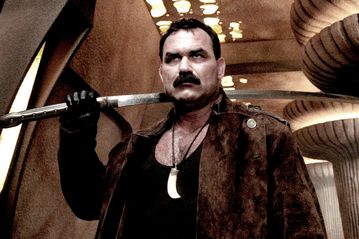
Don Frye and his epic moustache
As to the cast Shin’ichi Ozaki (Masahiro Matsuoka) is not the most lively of actors but, courtesy of some very forgiving cutting and slow-motion, fights quite well when called upon to defend Earth. His love interest is Miyuki Otonashi (Rei Kikukawa) who’s supposedly a biologist but, apart from using it to store costume jewellery, would not know what to do with a test tube. Her older sister, Anna Otonashi (Maki Mizuno) is more credible as a newscaster but she’s only there to look like a love-struck mooncalf at Colonel Douglas Gordon (Don Frye) who’s one of these mixed martial artists turned “actors” who hides behind a large moustache and pretends he can’t speak a single word of Japanese. Other humans are involved but they are less important. The cast of monsters is impressive including Anguirus, Ebirah, Kamacuras, Rodan and others. Minilla is, as always, endearing with the Twins and Mothra doing their fortune cookie act to warn the humans of the need to die with dignity if attacked by monsters. Given we have the serial destruction of Paris, Sydney, New York and other iconic cities, we get to see extras of many different nationalities and races throwing themselves around with considerable enthusiasm. All of which just leaves us to talk about the Xilian Regulator (Kazuki Kitamura) who has gone on to do good work in the Galileo and other series. Courtesy of the lighting and careful fight choreography, he does well as the villain who learns the hard way that using hard attacking styles all the time loses out to soft power. The only other name I need mention is Tsutomu Kitagawa who’s one of Japan’s best suit actors. You may not know it, but he’s the stuntman behind many of the monsters and the Power Rangers. Truly a man making a career out of anonymity. Put overall, Godzilla: Final Wars or ゴジラ ファイナルウォーズ is so absurd it becomes enjoyable. Not having seen a “proper” Godzilla film for several decades, this was a wonderful excursion down nostalgia lane.
Stalked: The Boy Who Said No by Patti Sheehy

In the beginning, before there was any recognised form of writing, oral narratives were the only way of preserving memories of what had happened. People passed down the experience that would benefit those who followed. As writing developed, generational knowledge was easier to preserve. Faster progress could be maintained. Except, of course, people can lie to each other whether by spoken or written word. History is one of the more abused cultural artefacts, with facts misrepresented or manipulated to gain future advantage. Today, we’ve developed a multiplicity of different forms for transmitting information. However, one thing remains true. The line between history and fiction can and will always be blurred.
Stalked: The Boy Who Said No by Patti Sheehy (Oceanview Publishing, 2014) is the second and probably concluding volume that tells the life history of Frank Mederos, a Cuban who escaped from his native country and made a life for himself in the United States. It’s relevant to draw your attention to the author’s name. In other circumstances, this might have been an autobiography, ghosted by Ms Sheehy. As it incorporates a significant number of fictionalised scenes, recreating what the protagonist assumes happened, the “author’s” input is too substantial to ignore. We perhaps should therefore view this as a novelised autobiography, or a straight biography, or consider the whole a piece of historical fiction. Why, you ask, should this question of the label matter? Well, the book is presented to the readers as a “true life story of romance, suspense, and intrigue”. If we take this as an accurate version of what Mederos told his scribe, we can attribute all the prejudices on display to him. The American amanuensis is doing no more than channel his words to us. She is not at fault in any way. But if she is promoting the notion that everything that happened in Cuba was evil and most of what happens in America as the land of opportunity is good, historically speaking, that’s not uncontroversial.
For example, Mederos arrives in New York in 1967 and pays a quick visit to the race riots in Newark. What makes this interesting is that the riots are not given any real context or explanation. Even more interesting is that Mederos himself never seems to be the victim of any discrimination based on his nationality or his inability to speak English. His can-do attitude is lauded and he gets the results he needs in order to become a successful small-scale businessman. He’s the epitome of what’s often held up today as everything that’s wrong with America. By welcoming immigrants, America is depriving its own citizens of jobs, and so on. Ironically, the federal government passed a “dream act” in the form of the Cuban Adjustment Act of 1959. Any native or citizen of Cuba who was physically present in the US after 1st January, 1959 and lived there for a year, was automatically deemed a permanent resident. In many circles, this was not a popular law and, under pressure, it was repealed in 1966. This book calmly glosses over all the racial and ethnic problems of the day and, instead, focuses on the inefficiency and corruption in Cuba to the exclusion of all else. Indeed, Mederos is a hero because he defects and Lazo, who stays behind and spies for the CIA, is held up as an example of how every right-thinking member of a society should react when confronted by a regime he finds repugnant.
In other words, this is a book written with every conceivable bias an American author should include to sell a book about the Cuban experience to the great American public. No matter what the truth might be, the black and white portrayed here is what sells the book. Even the fanatical communist who’s sent to stalk and kill Moderos questions his orders, seeing no threat to “his” country in the activities of this sandwich-maker. Hooray for America when even a trained assassin is subverted just by observing the lifestyle of a Cuban exile. This is not to say the book is without merit as a story of a man who joins the woman he loves in America, and tries to make a life for his family. I just wish that, as a book that’s promoted as “history”, it did not whitewash away all the problems in America, and see only the worst in Cuba. So if you are an American who wants a book to confirm your prejudices that America did everything right in dealing with the “threat” of Cuba on its doorstep, this view of American history from 1967 to 1980 or so is probably for you. But if you would prefer a book that presents the history with a little more depth and balance, Stalked: The Boy Who Said No is definitely not for you.
A copy of this book was sent to me for review.
Innocence by Dean Koontz
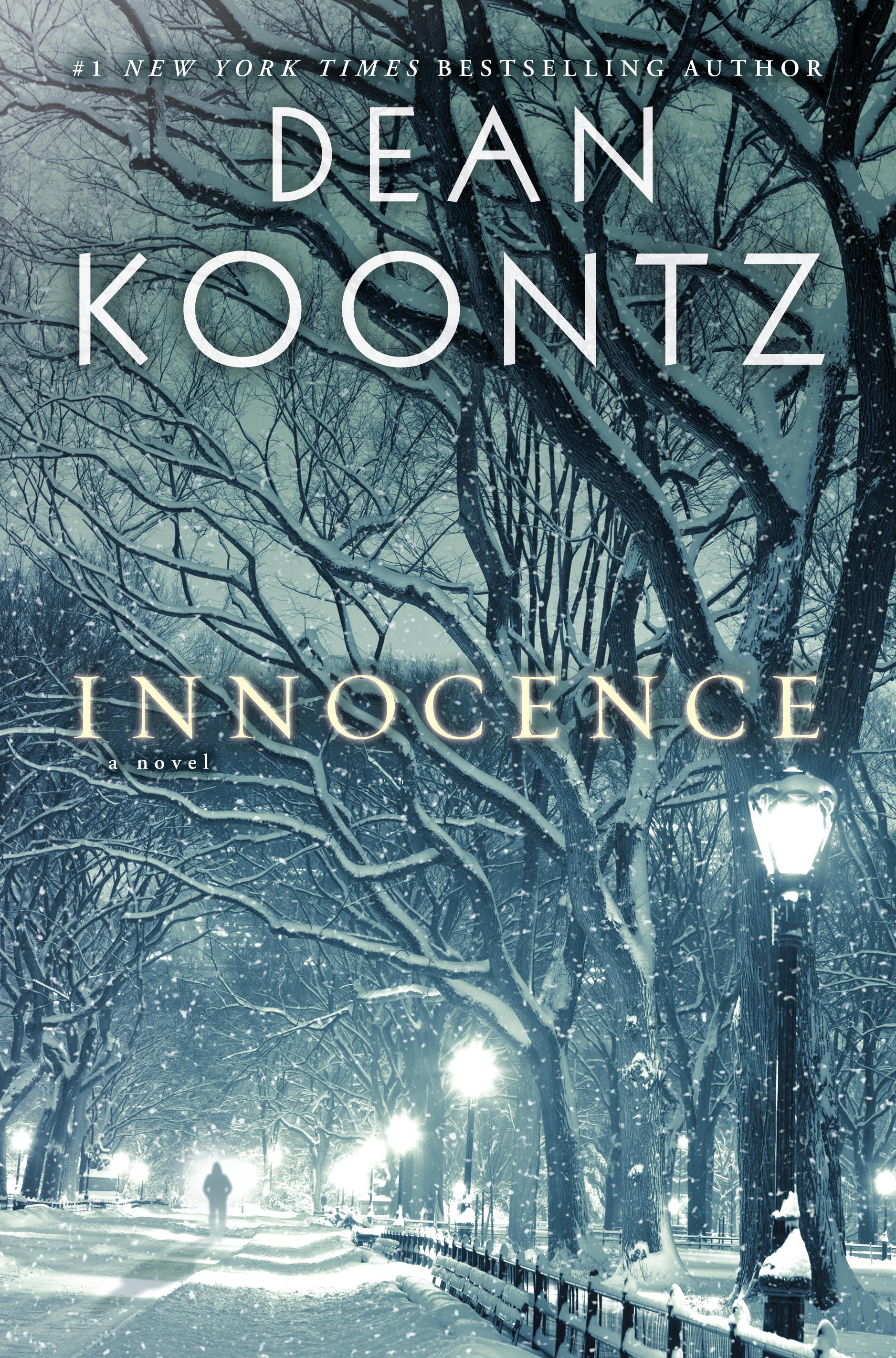
Spoiler alert. For once I’m going to talk about the plot is some detail so, if you prefer to come to this book without preconceptions, do not read this review.
As a lifelong atheist, I feel I’ve been the victim of some discrimination. Back in the 1970s and 80s, I read most of the novels by Dean Koontz (including those written under the various pseudonyms), but slowly grew tired of the style. Having taken my thirty year sabbatical, I therefore thought it would be interesting to see what the latest book was like. It’s called Innocence (Bantam Books, 2014) and, as you can see, the jacket artwork shows a scene featuring a lonely man in a hoodie, standing in the middle of a snowscape. It creates the impression that this man is a threat of some kind and that, as the book develops, we’ll go through the usual supernatural or horror thriller format of this man preying on the innocent or acting as a vigilante to protect the innocent. Nothing could be further from the truth. In fact, the plot has this figure as a victim who hides himself away from the world. Worse, the final third of the book retrospectively converts the novel into an explicitly Christian and specifically Catholic tale. When the publishers design books with Satanic or other themes which they believe might upset the Christians, they put warning pictures and words on the jacket. There’s nothing on the jacket or blurb to warn atheists that this book is going to be deeply annoying.
So what do we have? This is a first-person narrative of a young man whose entire life has been blighted by his appearance. When he was born, the midwife wanted to kill him. This set the pattern and, had the mother not lived in a desolate house deep in the woods, he would not have survived. When he’s eight-years-old, his mother announces she can no longer stand him and throws him out. As he hides in the woods around the home, he sees his mother commit suicide so you can tell his appearance must be horrendous. At this point, all the options are on the table. He’s physically disabled in a very disturbing way. He’s hairy like a werewolf. He’s the antiChrist. To maintain suspense, there are no clues — our narrator is very unreliable and never describes what he sees in the mirror. When he comes to the city, he’s rescued by another older member of his “kind”. This man teaches him survival strategies and shows him how to live underground. Unfortunately, they are out in the early hours of the morning, having fun, throwing snowballs at each other when they are challenged by two police officers. As the man takes off his mask, the officers are so horrified, they immediately open fire and empty their guns into him. This distraction enables the young man to escape.

Dean Koontz
Fortunately, our hero meets a young girl. On the night her father was murdered, she escaped rape when fourteen and has been living a reclusive life while trying to collect evidence that will prove the man guilty of the murder of her father and the attempted sexual assault. They team up and then have one of these intense twenty-four hours in which several people are kidnapped and/or murdered, they go on the run, and the world as we know it ends. It seems the North Koreans are the agents of the Devil and have released a virus that will wipe out most of the human race.
This girl had a father so rich he could leave her with ten places to hide, one outside the city, miles into the countryside. This is very convenient. Further, to maintain security, only one other man is supposed to know where these places are. So she can safely play hide-and-seek around the city. Except how does she maintain all these places? There must be people who go in to clean and tidy, do the washing, and keep the refrigerator stocked with food. It’s not a problem financially. There are millions stashed away in different accounts and trust funds. But it’s the logistics of all these people going in and out of these places and never talking about it. No burglars ever break in. The pipes never freeze and burst during the winters. Then we have her remarkable powers of foresight. She can set up meetings around the city as the snow begins to fall, and she and the narrator will always end up at the right place at the right time for the plot to work. No, sorry, this is just the author moving the characters around so the plot will work out. There’s no suggestion she has supernatural powers of foresight.
And who are this pair? Well, by now you should be thinking they are the “reincarnation” (sorry, wrong religion) of Adam and Eve. Except that’s not quite right. They are pure innocence. In a photograph, they would look perfectly normal. But face-to-face with “ordinary” humans, they radiate a judgmental field in which the humans are immediately aware of all their sins. These poor folk are so horrified by the extent of their wickedness, they immediately set to and aim to kill the innocent one(s). To add insult to injury, there are also angels and devils floating around. In the end, the innocent survive the plague and go off to repopulate the world (a task which may take some time, so God provides manna to avoid the need to eke out dwindling food supplies). This makes Innocence an Armageddon novel with God providing the means for humanity to get a second chance. But this time, they are starting off with those who retain their innocence and are free from original sin. That should give the future generations a better chance of avoiding sin and walking in the path of righteousness. I suppose I have to classify this as Christian fantasy. In less polite mode, I can think of better ways of describing this literalist biblical belief in a God who judges humanity not worth saving from the plague. He just presses the reset button and starts over. So if you are a Christian who wants to see your worldview affirmed, this is the book for you. Otherwise, ignore the author’s name and the jacket design. Innocence is not a horror novel. It’s a waste of your time.
A copy of this book was sent to me for review.
The Scarlet Tides by David Hair

As a metaphor, you could see war as a form of scarlet tide as waves of blood push across the shore towards the land, overwhelming the people. Or if you were already on the sand, you might see an army of soldiers dressed in red as matching the description. The Scarlet Tides by David Hair (Jo Fletcher/Quercus, 2014) is the second book in The Moontide Quartet. This is another of these books that was published in England in 2013, but did not make it to America until 2014. I’m therefore reading this one year after it first appeared and publishing this review almost one year after my review of the first in the tetralogy. Although my memory is very good about some things, I confess considerable haziness when I picked up this latest installment. Although I remembered the first book as very good, I could not remember very much of the detail. That meant the failure of the publisher to include a brief summary of the first book weighed heavily on me. There was not even a hint let alone a brief note explaining who everyone was and how they were related to each other. Yes, there are odd explanatory references as you read the text, but it did take me quite a while to build up any confidence I had worked out who was who, and which side everyone was on — not that people stay on the same side, of course. This memory problem was exacerbated by the sheer number of people referred to and the number of different locations to try fitting into the development of the plot.
However, with that reservation out of the way, I’m able to report this as the best fantasy book of 2014 so far. I was somewhat concerned that the world-building in the first book left quite a lot of the physics of the moon and its effect on the tides somewhat obscure. This does occasionally seek to rectify this omission. Other than that, there’s only one major innovation in this book. We’d already seen that the mages had the power to construct different types of animals. This has included beasts of burden and flying animals with the lifting capacity to carry a human. We now meet a new type which, in effect, draws on the mythology of this alternate Earth for its form. As a result, the primary focus of this book the development of the characters as they struggle to survive and/or advance their agendas. The only time the plot slows down is when it becomes necessary for a new person or group to begin to understand how the system of magic works. So instead of having the “Hogwarts” style of formal academic training we saw in the first book, we have more one-to-one teaching. This is saved from becoming boringly repetitious because, in each instance, the practical teaching is actually a mechanism for creating mutual trust and the possibility of affection, if not love.

David Hair
So we advance into the more everyday world of the Crusade as the army makes progress across the desert. As we readers already know, the locals are rather better prepared this time around and it’s interesting to watch exactly how far the army gets before it realises there’s real opposition. To give us an insight into the life for the boots on the ground, we’re allowed Ramon as the point of view and his Ponzi scheme to ramp up the value of his spurious letters of credit by stockpiling the year’s opium crop is a delight. In terms of its breadth and daring, I was reminded of Catch-22 and Milo’s Syndicate which even accepted commissions for American planes to bomb American bases. In one of the geographically significant states, we watch the ebb and flow of Gurvon Gyle’s efforts to deal with the Dorobon family and advance his own plans for power. As for the other groups, the search for the McGuffin accelerates with more people becoming aware of its existence. How it’s lost and then comes back into the possession of one of the good guys is another very pleasing sequence. At some point, later in the series, they will work out what it does and how to persuade it to do it. At this point, no-one has a clue how it might work.
Taking the overview, the pace and quality of the writing makes this one of the best epic fantasies for a long time. It should go without saying that you should not attempt to read this unless you have also read the first in the series, Mage’s Blood. The experience is so much better when you’ve got the whole story straight in your head. If you do not read any other fantasy book this year, ensure you read The Scarlet Tides.
For a review of the first in the series, see Mage’s Blood.
A copy of this book was sent to me for review.
Death on Blackheath by Anne Perry

Sometimes, it takes a book as good as this to remind you how enjoyable a novel set in Victorian times can be. For my sins as a reviewer, I’ve been reading quite a lot of steampunk lately and, set against Death on Blackheath by Anne Perry (Ballantine, 2014), the majority of such books are shown to be shallow and rather pedestrian. This has all the best features of proper historical fiction with a little real science thrown in and a lot of genuinely thoughtful detection work in pursuit of a murderer or (if such a thing is possible) someone worse. In terms of quality, this matches my other favourite historical drama from a different medium. Foyle’s War is a television detective series set during World War II with each murder or other crime growing organically out of the culture and events of the time. What makes this series so enjoyable is its willingness to see all the shades of moral gray with a police officer prepared to bend the rules to both catch “criminals” and let them go as circumstances dictate. It’s also fascinating to see television prepared to deal with corruption both in the police force itself, the armed services, and among some of the supposedly higher reaches of society.
This novel sees us in the world of Special Branch with Charlotte and Thomas Pitt joining up with the cast of regulars to keep the British Empire safe. We start off with the body of a young woman discovered in a gravel pit almost on the doorstep of the home of a leading British scientist. This makes it a Special Branch case because anything that may affect a key member of the scientific establishment has to be investigated by those able to “see the big picture”. In this case, the investigation is made difficult because, although a maid has gone missing from the house, the identity of the woman in the pit is not at all clear. Her face has been completely disfigured although her hair is just about the right colour. However, she does have in her possession two objects which apparently link her to the house. The first is a handkerchief which is marked with the same initial letter as the lady of the house. The second is a pocket watch which belongs to the scientist. When he sees it, the scientist asserts that it was stolen from him some weeks earlier in Oxford Street. The theft was not reported to the police and there are some possible lies when he’s asked to account for his movements during the weeks leading up to the discovery of the body.
I’ve seen the basic idea of this plot used before, but this particular application is one of the most extreme examples of the trope. This makes the underlying mystery challenging for the armchair detective to solve and, in a way, it’s also slightly contrived. Indeed, in the real world, I seriously doubt people would actually behave in this way, but I forgive the author because it does make for a rather pleasing problem for the team to solve. I also note a slightly pleasing modern parallel as we approach the end. This juxtaposition between the historical and the modern does point the difference in the way honour worked back in Victorian times. When people felt indebted to each other, they were more prepared to bend or even ignore rules in order to discharge that debt.
Put all this together and you have a good mystery with some impeccable social commentary both on the class system as it then applied and on the role of women. Although one of the elements of romance proves to be a little predictable, there’s a generally plausible feel to the relationships that underpin the working of the plot. The characters generally feel right for the time. For those who enjoy intelligent writing in service to a good plot, Death on Blackheath is excellent value for money.
A copy of this book was sent to me for review.
Elective Procedures by Merry Jones

Elective Procedures by Merry Jones (Oceanview Publishing, 2014) sees us back in the confusing world of Elle Harrison. For those of you who have yet to read The Trouble With Charlie, the first in the series, a few words of explanation are in order. This is a woman formally diagnosed with dissociative disorder. This means her awareness of events around her can abruptly cease and then restart some little time later. If she’s involved in conversations or listening to others speak, that means she can miss vital elements in what’s being said. If there are high stress events, she’s likely to suffer amnesia. Indeed, at times, her grip on her own identity can be less than secure. The author, in other words, has carefully decided to feature an unreliable narrator. To add a further layer of confusion, there’s also the suggestion of possible supernatural powers at work. In particular, the first-person narrator regularly sees her husband Charlie whom we know from the first book to be dead. In this book, there’s a similar confusion as to whether she’s seeing real people, or ghosts, or merely hallucinating. To compound this confusion, she and a friend consult a fortuneteller who makes the usual generic predictions for the friend, but asserts our protagonist attracts the dead to her and that she’s likely to be in some danger (now there’s a surprise).

Merry Jones
This is a kind of cozy mystery masquerading as a thriller. We have four women who decide to go to Mexico. One has decided to have cosmetic surgery (without telling her husband). She wants moral and physical help from her friends to get her through the door of the operating theatre and then to recover from the surgery. One of the remaining three is a lawyer who finds herself online for most of the time in the resort, dealing with urgent problems from the firm she works for. This leaves the other two with the chance to engage in a little holiday romance. The “other” decides one of the entertainment officers is for her. Our hero finds herself involved with the cosmetic surgeon who sees nothing ethically wrong in dating the friend of a patient rather than the patient herself. So far, we’re running along fairly predictable lines.
Early in the book, our hero finds herself attempting to rescue the woman occupying the next suite in the hotel where they are staying. But before our hero can cross from her balcony to the next, the woman falls to her death. At this early stage, it’s uncertain whether this is a murder, accident or suicide, but since the victim has just had cosmetic surgery and should be feeling good about herself, suicide looks unlikely. When another woman is killed in the same suite two nights later, we have the mystery set up and ready to run. However, our author obviously believed the plot would not sustain itself over the usual running length of a mystery novel, so there’s a further level of complexity introduced. For the record, it’s obvious from quite early on, given this particular protagonist, who the killer in the hotel suite must be. This leaves it up to the grafted element to carry the thriller aspect of the novel. Unfortunately, this is less than successful, leaving the whole novel somewhat thin. The romance plays out along predictable lines as well, so on balance, Elective Procedures is not a particularly impressive second book in what’s obviously intended as a growing series.
For a review of the first in the series, see The Trouble With Charlie.
A copy of this book was sent to me for review.
 Thinking about books